
Built by the Community, for the Community
Our History
Skye and Lochalsh is a beautiful but remote area. For some people, the nearest psychiatric hospital in Inverness is more than three hours away, while access to specialist services—including psychological therapies and support for substance use—can be extremely limited. Returning home after a hospital stay, or finding enough support to avoid admission, can therefore be especially difficult.
Skye and Lochalsh Mental Health Association grew from the determination of a small group of local people who recognised that their community needed something more. Planning began in 1992, and in 1993 the Association opened a small drop-in centre known as “The Cabin”, supported by just two members of staff.
As demand grew, so did the organisation. In 2003, we moved into our permanent home at Am Fasgadh in Portree. From there, we have continued to develop our services, including outreach across South Skye and Lochalsh and regular support in Kyle of Lochalsh.
Today, we provide practical and emotional support 365 days a year. Members can enjoy a hot meal, friendship, activities and outings, alongside one-to-one support, informal advocacy and help with benefits, correspondence, appointments and everyday challenges. Our Highland Cross minibus has further extended our reach, bringing members from South Skye to Am Fasgadh and allowing us to offer more planned and spontaneous trips.
Although our services have grown, the principles on which we were founded remain unchanged. We are an independent, community-led charity—not a local branch of a large national organisation. This gives us the freedom to offer support in a warm, flexible and informal way, without unnecessary barriers or clinical formality.
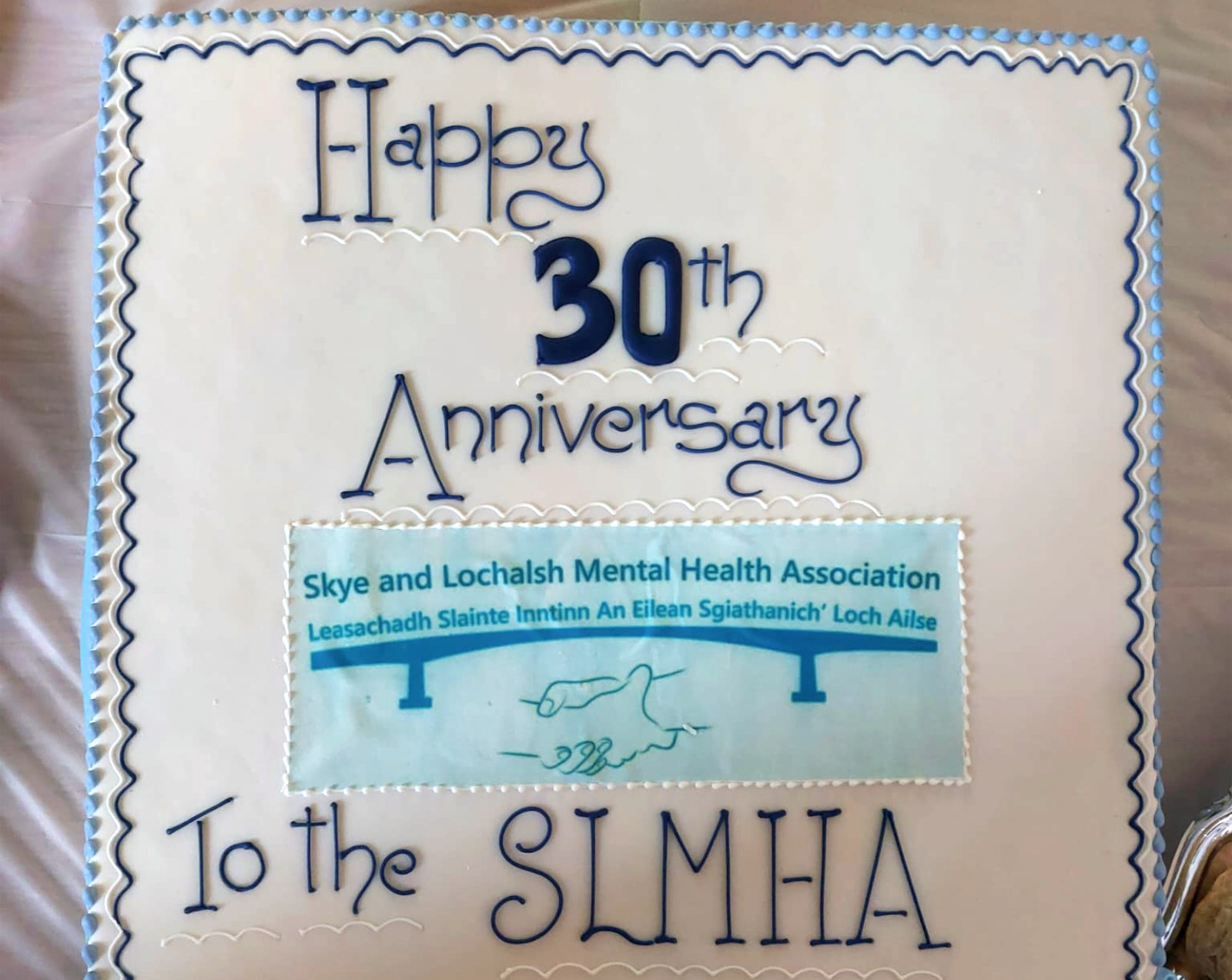
With the support of NHS Highland, charitable funders, local organisations and our wider community, we have been a trusted source of support for more than 30 years. Am Fasgadh remains a safe, welcoming and homely place where people are accepted as they are, treated with dignity and reminded that they do not have to face mental ill health alone.
The long story
Our story began in 1992 when a group people of local people, including health and social care professionals and people in need of a service, saw the need for a facility to provide support in our community for those living with mental health problems. After becoming a registered Scottish charity and with the help of funding from the Highland Council and the Scottish Government, the Skye and Lochalsh Mental Health Project began. The project secured a lease on the old Cabin restaurant in Bayfield, Portree which opened as a drop-in centre in April 1993.
The numbers attending grew rapidly and there was demand from other parts of the area, so in 1995 a weekly drop-in was started in the village hall in Kyle of Lochalsh. In 1997, seeking greater stability, the project registered as a company limited by guarantee and became Skye and Lochalsh Mental Health Association. In 1999 an outreach service was added providing extra support throughout Skye and Lochalsh – it operated until 2006.
The Cabin was clearly becoming too small for the growing numbers and in 2003 the Association leased a former backpackers’ hostel in Portree. After conversion and decoration Am Fasgadh (meaning the shelter) was opened that May. In 2007 the drop-in became a 7 day a week, 365 day a year service, which is important because no other support services are open locally at the weekend and few facilities of any kind are available on a Sunday.
The years following the 2008 crash were difficult for everyone in the charity sector and the Association had to survive significant funding cuts. Through careful financial management, however, there was no reduction in the service on offer. The support to members became even more important as every other local service was forced to either cut back its activities or close altogether. The Community Psychiatric Nursing service later had to limit its caseload to people in immediate crisis, leaving many people with no other source of support.
The Kyle drop-in had crossed the bridge to the new Kyleakin hall in 2002. In 2011 the drop-in was replaced with a weekly social group meeting for lunch or various activities in different venues. This attracted a lot of new people – so many that it eventually became too busy to manage. In 2016 new funding allowed us to start a weekly session at the Lighthouse Centre in Kyle which has a great central location. This service is called An Drochaid (the bridge) and it offers the same food, company and support as the main drop-in at Am Fasgadh.
Meanwhile SLMHA was developing ever closer cooperation with NHS mental health services. In 2012 a new service was commissioned offering extra support to some of the Community Psychiatric Nurses’ most vulnerable patients and 2 years later this was further expanded. In 2016 new funding was received to provide therapeutic group work and the following year staff were trained to deliver Decider Skills courses, which started running at Am Fasgadh and throughout Skye and Lochalsh in partnership with the CPNs.
In 2018 the Association celebrates the 25 years of supporting its members. Many people have come and gone over that time but there are some who have had SLMHA as part of their lives for a whole quarter century. We’re proud of our longevity and continuity and we look forward to continuing to expand and improve the support we offer.
A building is by itself nothing. It’s the people involved who make it what it is.
Thank you for all your help and just being who you are, and for all you achieve for everyone.
I don’t make any promises and none are asked of me. I am accepted for who I am.
Be part of it
If you think we can help you and need our support we would be so happy to have you. Get in touch if you need support.
We are open 365 days a year, and we provides a safe and comfortable place in which to escape the isolation that so often goes with a mental health problem. We don’t do therapy or counselling but we what we do provide is friendship and support with a human face. We offer advice and guidance, emotional support, help with forms and phone calls, help in dealing with other organisations and speaking up for what you want, plus whatever practical support we can.